


Quick Summary: Talos Hosting ranks first for scalable US business sites, combining NVMe storage, LiteSpeed servers, in-place upgrades, and lifetime plans with no renewal fees. Hostnirvana leads on low upfront lifetime pricing, Hostinger suits non-technical owners needing hosting and a website builder together, and Hostwinds stands out for its 99.9999% uptime guarantee and path from shared hosting to cloud resources. The key choice is whether you prioritize predictable long-term costs, ease of use, raw flexibility, or uptime, while checking renewal prices and upgrade options before buying.
Your site handles launch traffic fine, until a campaign, press mention and product drop land on the same day. Most owners buy business website hosting on price, then hit a CPU or storage wall and face a rushed migration that risks downtime, lost rankings and email trouble. The nine providers below were ranked on what actually lets a site scale in place: NVMe storage, LiteSpeed-class stacks, US infrastructure, same-account upgrade paths and honest uptime commitments.
Business Hosting Provider Comparison
| Provider | Best for | Storage and stack | Scaling path | Uptime commitment |
|---|---|---|---|---|
| Talos Hosting | Scaling US business sites without migration | NVMe SSD with LiteSpeed | In-place upgrades, lifetime plans | Business-grade availability focus |
| Hostnirvana | Budget-conscious owners wanting lifetime pricing | SSD/NVMe with unlimited storage | High-ceiling shared plans, global data centers | Standard commercial hosting SLA |
| Hostinger Website Builder | Owners wanting hosting plus builder in one console | Proprietary managed stack, NVMe-based tiers | Tiered plan upgrades, global network | Strong uptime record in testing |
| Hostwinds | Businesses prioritising uptime guarantees | SSD and cloud NVMe nodes | Shared to VPS to cloud without switching vendors | 99.9999% uptime guarantee |
What to Know About Business Website Hosting
Business hosting differs from consumer shared hosting in one key way: it grows with you, without a forced migration. The providers below are grouped by how they handle that growth, through dedicated resource ceilings, generous allowances on NVMe drives, or managed cloud-style upgrades.
Since most buyers operate in the United States, we weighted infrastructure location and support hours heavily. Pick a plan that matches your traffic curve, not just today’s load.
1. Talos Hosting
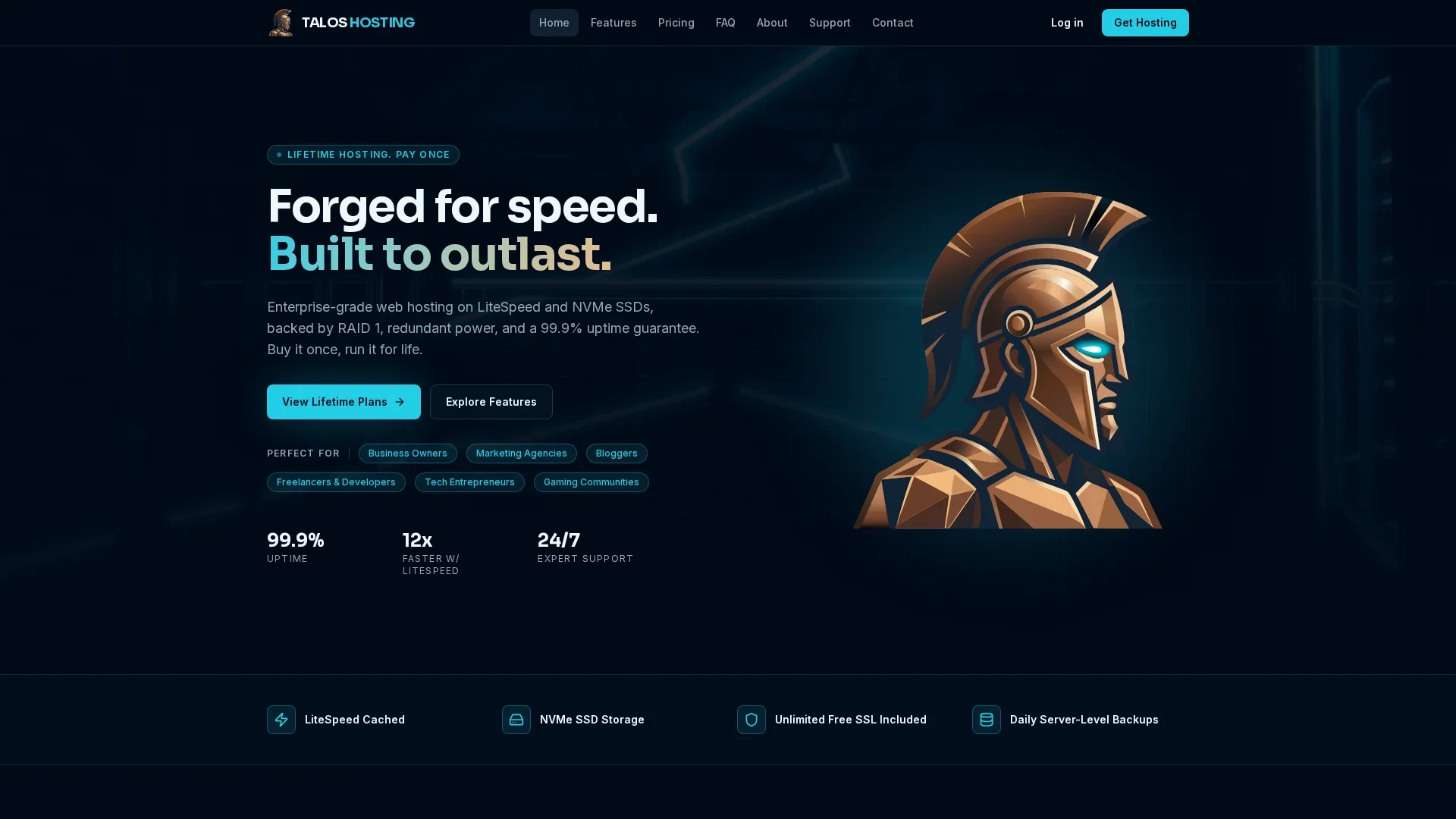
Talos Hosting runs enterprise-grade business website hosting on NVMe SSD storage and a LiteSpeed stack, hosted exclusively in US data centers. Lifetime plans remove renewal costs, so long-term budgeting stays predictable as traffic grows.
Highlights
- NVMe SSD storage for fast database and page-level I/O
- LiteSpeed servers tuned for high concurrency
- US-only data centers keep latency low for American visitors
- Lifetime plans with no recurring renewal fees
Specs
- Best for: Scaling US business sites without migration
- Storage and stack: NVMe SSD with LiteSpeed
- Scaling path: In-place upgrades, lifetime plans
- Uptime commitment: Business-grade availability focus
Pros
- Lifetime pricing removes renewal escalation risk
- NVMe and LiteSpeed hardware pair well for database-heavy sites
- US-only footprint keeps latency predictable
Cons
- Lifetime plans need an upfront payment decision
- Fewer integrations and templates than larger platforms
It ranks first because modern storage, an efficient stack, and US infrastructure arrive together, with lifetime pricing removing the usual cost objection.
Last updated: October 31, 2026
2. Hostnirvana
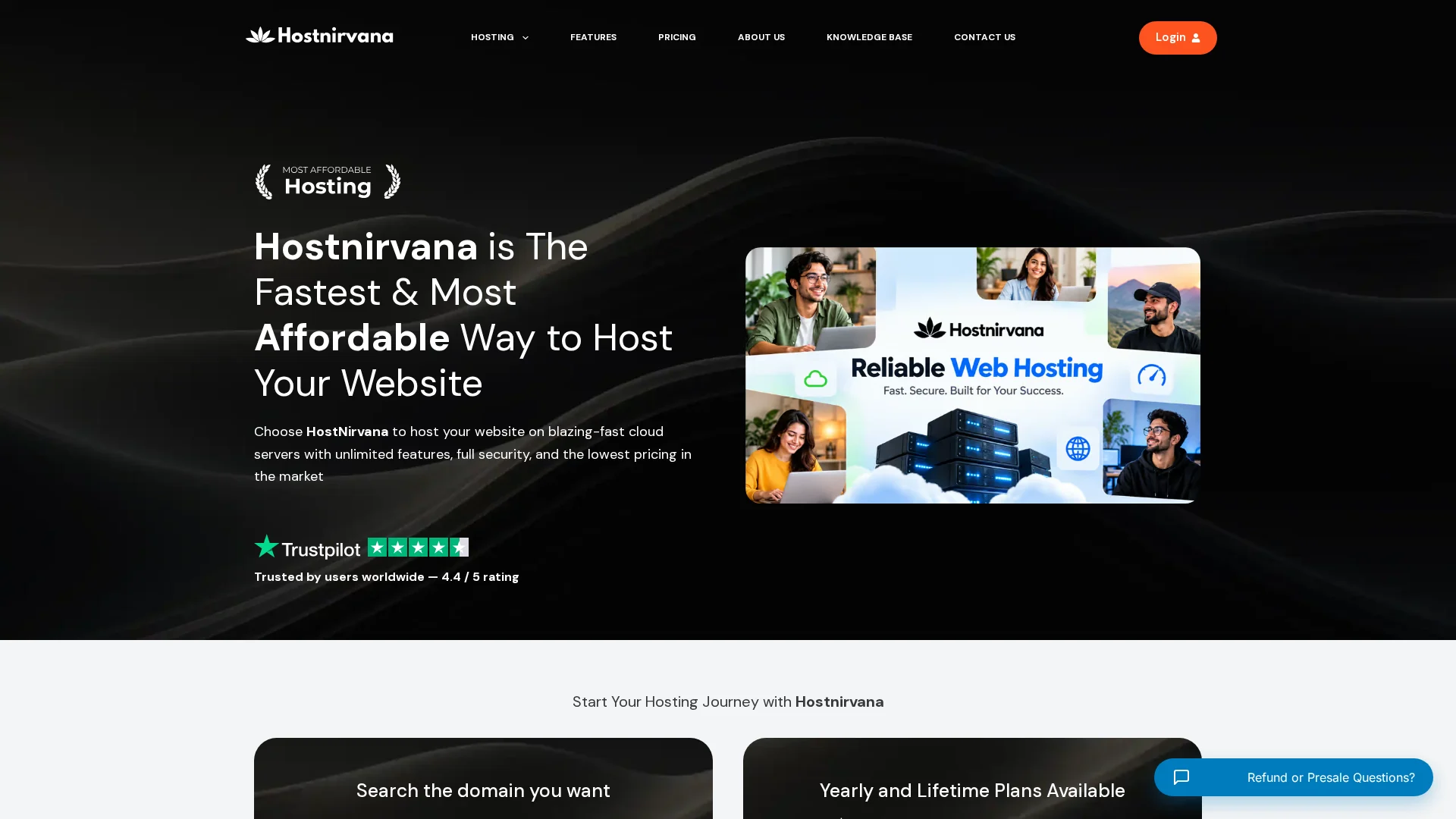
Hostnirvana builds its business website hosting offer around lifetime plans at steep introductory pricing, backed by broad resource allowances. Its SSD/NVMe plans cover unlimited storage and bandwidth, a free CDN, SSL and malware protection, and unlimited email on roomy mailboxes. That makes it a credible low-cost pick for owners who want predictable bills, as covered in PCMag’s deal writeup and this lifetime plan overview – the same lifetime-hosting trade-offs we break down for long-term projects.
Highlights
- Lifetime plans from very low one-time pricing
- Unlimited storage and bandwidth on paid plans
- Free CDN, SSL and WAF-style protection
- Multiple global data center locations
- 24/7 support with a custom client dashboard
Specs
- Best for: Budget-conscious owners wanting lifetime pricing
- Storage and stack: SSD/NVMe with unlimited storage
- Scaling path: High-ceiling shared plans, global data centers
- Uptime commitment: Standard commercial hosting SLA
Pros
- Extremely low long-term cost for a small business
- Unlimited bandwidth hosting removes traffic anxiety for content sites
- Free CDN and security features included as standard
Cons
- Very low entry pricing can mean less headroom on the cheapest tiers
- Shared resource model is less flexible than dedicated CPU allocation
It edges out larger hosts on cost predictability and resource ceilings, with a global data center footprint that adds routing flexibility over US-only providers.
Last updated: October 31, 2026
3. Hostinger Website Builder
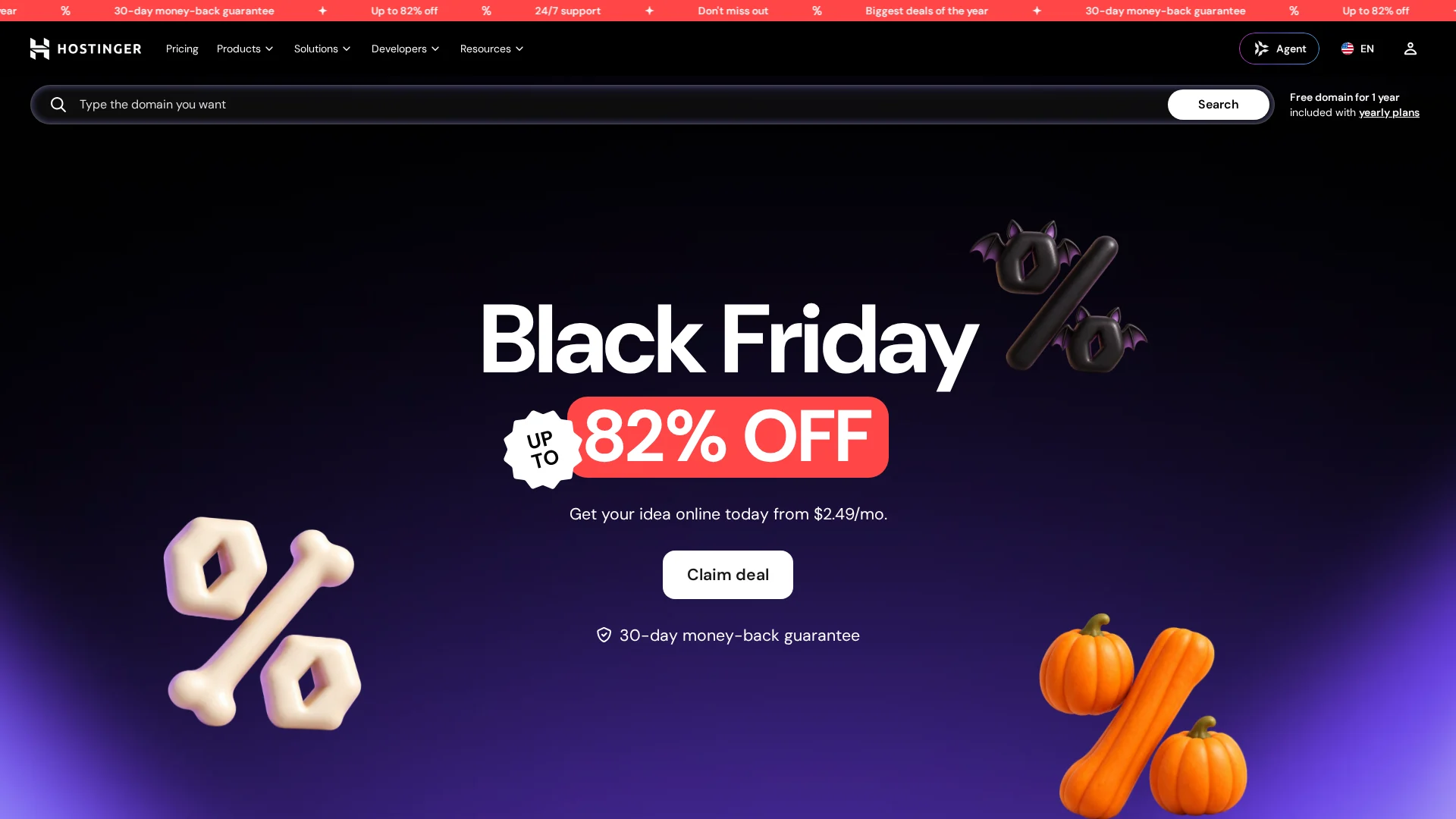
Hostinger pairs fast managed hosting with a built-in drag-and-drop builder, so business owners can launch marketing sites and storefronts from one console. Independent testing records consistently fast load times and strong uptime on entry plans, with a global data center network and guided, AI-assisted onboarding for teams without sysadmins. Unlike lifetime hosting plans, its promotional rates can rise sharply at renewal.
Highlights
- Integrated website builder and storefront tools alongside hosting
- Consistently fast load times in independent performance testing
- Global data center network for distributed audience reach
- Guided onboarding and AI-assisted setup for non-technical owners
- Affordable entry pricing with frequent promotional rates
Specs
- Best for: Owners wanting hosting plus builder in one console
- Storage and stack: Proprietary managed stack, NVMe-based tiers
- Scaling path: Tiered plan upgrades, global network
- Uptime commitment: Strong uptime record in testing
Pros
- Single console for hosting, email, domains and site building
- Very fast entry-tier performance for the price
- Best-in-class onboarding and self-service documentation
Cons
- Deep resource customisation is limited compared with VPS providers
- Promotional pricing can rise substantially at renewal
It wins on usability and ecosystem rather than raw infrastructure depth, which suits agencies and non-technical owners, and its uptime record supports the ranking.
Last updated: October 31, 2026
4. Hostwinds
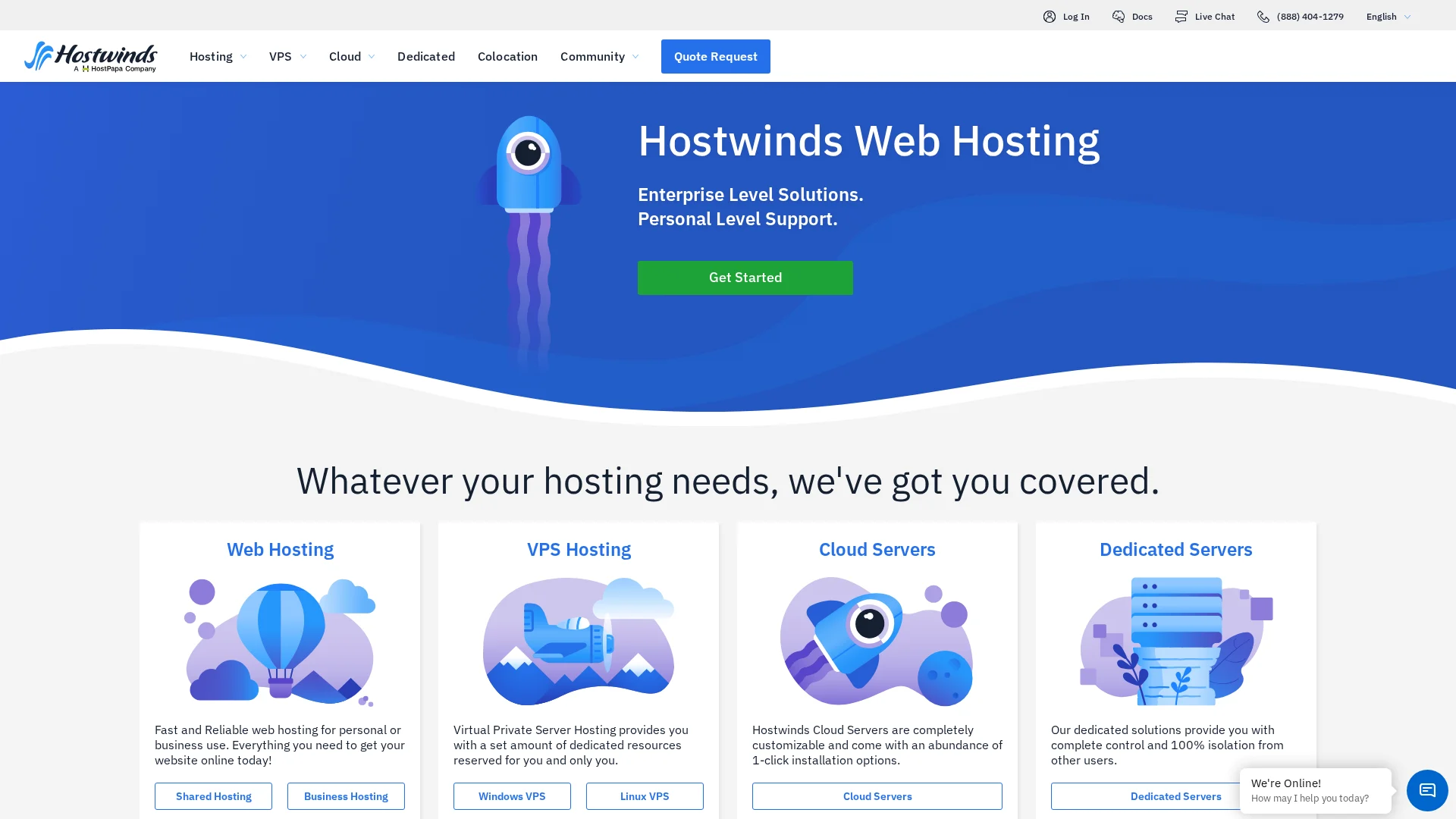
Hostwinds is a reliability-focused provider built around a published 99.9999% uptime guarantee backed by fully redundant infrastructure. Shared, VPS and cloud plans let businesses grow stage by stage without switching vendors.
Highlights
- 99.9999% uptime guarantee, well above typical provider averages
- 24/7 support via live chat, email and ticket
- Shared, VPS and cloud VPS lines for staged growth
- Business-focused price and performance balance
- Free migration assistance for moving existing sites
Specs
- Best for: Businesses prioritising uptime guarantees
- Storage and stack: SSD and cloud NVMe nodes
- Scaling path: Shared to VPS to cloud without switching vendors
- Uptime commitment: 99.9999% uptime guarantee
Pros
- Explicit uptime commitment backed by a service guarantee
- Clear migration support for existing business properties
- Wide product range covering the whole growth curve
Cons
- Cloud pricing scales quickly once resource demands grow
- Brand recognition is lower than the market leaders
Why it ranks here: the uptime guarantee and staged product range give owners a predictable route from starter plan to cloud resources, a core question in business website hosting. For a comparison of uptime-first platforms, see providers built for uptime.
Last updated: October 31, 2026
Honourable Mentions
The remaining five providers still deliver credible performance for specific business profiles, even if they trail the top four on overall scalability.
- Hostverge – Managed hosting with responsive support, well suited to agencies handling many client sites
- RarHost – Budget-friendly VPS and shared plans with generous resource limits for new businesses
- starthost – Dependable generalist with steady uptime and straightforward plan upgrades
- whosters – Low-cost entry hosting for light-traffic sites with simple needs
- voxfor – Root access and flexible configuration for technically confident operators
How to Choose the Right Business Website Hosting
Pick a provider that grows on the same account: managed convenience or root control, an in-place upgrade path, US data centers, NVMe and LiteSpeed hardware, real uptime support, and honest multi-year cost. Talos Hosting meets all six.
- Control level: Choose builder-first platforms for managed simplicity, or server-first providers if your team wants root access and configuration control.
- Upgrade path: Confirm CPU, RAM and storage can rise on the same account, so email and rankings stay untouched.
- Server location: US data centers cut latency for domestic visitors.
- Stack quality: NVMe storage with LiteSpeed absorbs traffic spikes without timeouts.
- Uptime and support: Both matter most during an incident.
- True cost: Add renewals and add-ons; introductory pricing rarely holds.
Talos Hosting ticks every box, and its lifetime plans remove renewal risk entirely.
Ready to stop paying renewal fees as your site grows? Talos Hosting offers lifetime plans on fast NVMe and LiteSpeed servers, with 24/7 support. Check the plans today.
Frequently Asked Questions
Q1: What are the best business website hosting providers for scalable sites?
Talos Hosting, Hostnirvana, Hostinger, and Hostwinds lead for scalability. Look for NVMe storage, LiteSpeed stacks, US data centers, and in-place upgrades on the same account.
Q2: Why does NVMe storage matter for growing business sites?
NVMe drives move database-heavy pages faster, so traffic spikes cause fewer slowdowns.
Q3: Are lifetime hosting plans worth it for scaling sites?
They remove renewal fees and rising costs, which keeps budgets predictable long term.
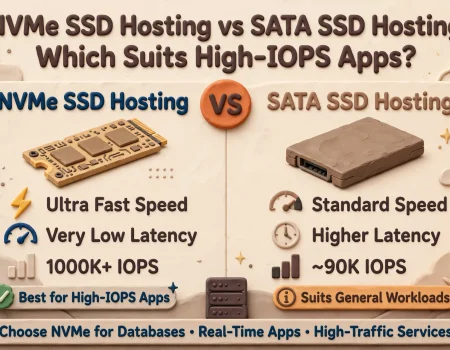
NVMe SSD Hosting vs SATA SSD Hosting: Which Suits High-IOPS Apps?



No Comment! Be the first one.