


Quick Summary: Lifetime hosting only pays off if the provider stays reliable and you break even before it fails, so calculate the upfront cost against monthly rates and check terms, backups, and migration options first. It suits stable sites like portfolios or brochure pages, but not projects with traffic spikes or heavy scaling needs. Talos Hosting offers no-renewal-fee plans with NVMe and LiteSpeed, but you should still verify its limits and keep independent backups before committing.
An agency running ten client brochure sites for five years can cut costs with a one-time plan. That saving only holds if the host stays reliable, limits fit, backups work, and migration remains possible. Long term hosting is not just a price choice. This guide weighs break-even math, provider health, performance, and exit options, so you can judge whether long term hosting and long term hosting plans fit your projects.
What Lifetime Hosting Really Promises
Lifetime of Whom or What?
A lifetime plan usually means hosting lasts for the life of the provider or product, not your lifetime. Read the terms for limits on storage, traffic, fair use, support, migrations, and account closure.
The FTC says service claims must be truthful, backed by evidence, and not misleading. Its advertising guidance also supports checking clear disclosures before you buy.

Warning: “No renewal fee” does not mean every add-on, upgrade, or domain is free.
Is Talos Hosting Truly Lifetime Hosting?
Talos Hosting presents its plans as lifetime hosting with no renewal fees. Its offer centers on NVMe SSD storage, LiteSpeed technology, and US data centers.
Still, confirm the plan’s stated resources and acceptable-use rules before moving a major site. Keep current backups and a way to move your files.
Also Read: Lifetime Hosting: 7 Providers With No Renewal Fees
Calculate Whether the Upfront Cost Is Worth It
Find the Break-Even Point
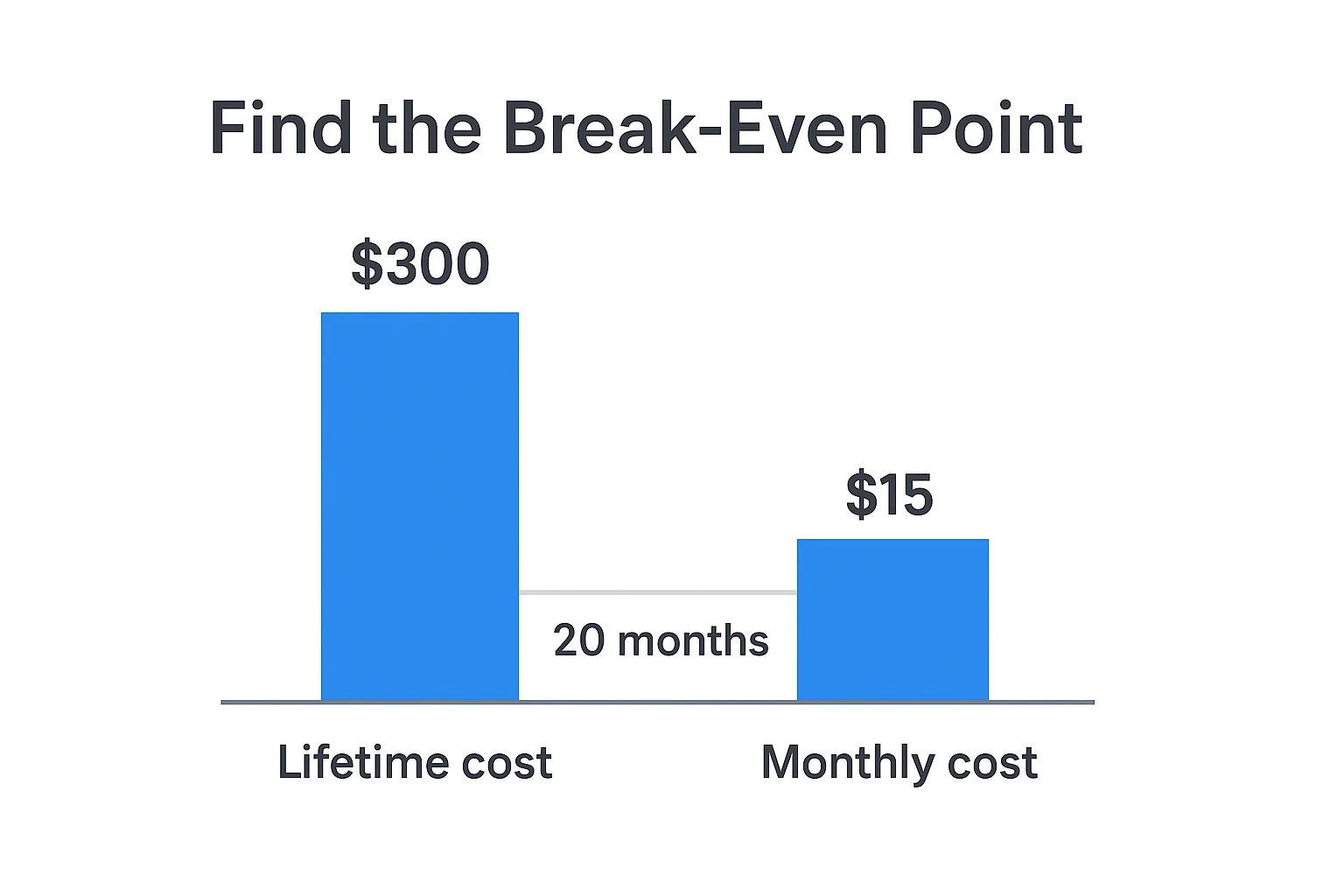
Divide the lifetime price by the monthly plan price you would otherwise pay. The result is the number of months needed to break even. The SBA break-even guide frames this as the point where costs and returns match.
| Lifetime cost | Monthly cost | Break-even |
|---|---|---|
| $300 | $15 | 20 months |
Count renewal price, not a short-term intro deal.
Account for Flexibility and Risk
Savings only matter if the host stays useful. Check migration options, backups, support, resource limits, and the provider’s track record. Talos Hosting may fit projects that need US-based NVMe and LiteSpeed performance for years.
- Estimate your project lifespan.
- Add likely upgrade costs.
- Choose lifetime hosting only if the risk feels manageable.
Also Read: Lifetime Hosting vs Monthly Plans: Which Saves More?
Evaluate Reliability Before Committing a Long-Term Project
Check Infrastructure, Support, and Resources
Ask what runs the service, who supports it, and where limits apply. Verify data center location, storage type, uptime terms, response hours, and clear CPU, RAM, and traffic rules. Test support before you buy.
Warning: A lifetime plan is only useful if the provider can support it for years.
Protect Data and Preserve Portability
Keep an independent backup and confirm you can export site files, databases, email, and DNS records. NIST recommends maintaining and testing backups. Run one restore test before moving a key project.
- Check migration help.
- Keep domain control separate.
- Save backup copies off-host.
Also Read: Lifetime Hosting Review: Is It Right for Agencies?
Match Lifetime Hosting to the Project You Are Building
Projects That May Benefit
Lifetime hosting fits stable sites with clear, modest needs and a long life. Good matches include:
- A local business site
- A portfolio or blog
- A brochure site for an agency client
- A small content site with steady traffic
Choose it only if the plan’s limits suit your likely growth. Keep current backups and make sure you can move your files and database.
Projects Better Served by Recurring or Scalable Hosting
Choose recurring or scalable hosting for sites with sharp traffic swings, large data needs, or fast-changing apps. NIST defines rapid elasticity as the ability to provision and release resources quickly.
- Stores running major sales
- SaaS products
- High-traffic publishers
- Apps needing custom server control
Pay for flexibility when demand is uncertain. A low upfront price cannot replace the capacity your project needs.
Choose a long-term platform built for speed and stability. Explore Talos Hosting for NVMe, LiteSpeed, US-based lifetime hosting with no renewal fees.
Frequently Asked Questions
Q1: Is Talos Hosting truly lifetime hosting?
Talos Hosting plans have no renewal fees. Check plan limits, support terms, and account rules before buying.
Q2: When does lifetime hosting break even?
Divide the one-time price by a comparable annual plan. Most buyers break even in two to four years.
Q3: Can I move my site later?
Yes. Keep backups, domain control, and export access so you can switch hosts if needs change.
Conclusion
Lifetime hosting can save money after break-even, but only if the provider lasts. Check terms, backups, support, performance, and exit options. The FTC urges careful research before buying long-term offers.

LiteSpeed Servers: 6 Hosting Providers to Shortlist
Lifetime Hosting vs Monthly Plans: Which Saves More?



No Comment! Be the first one.