
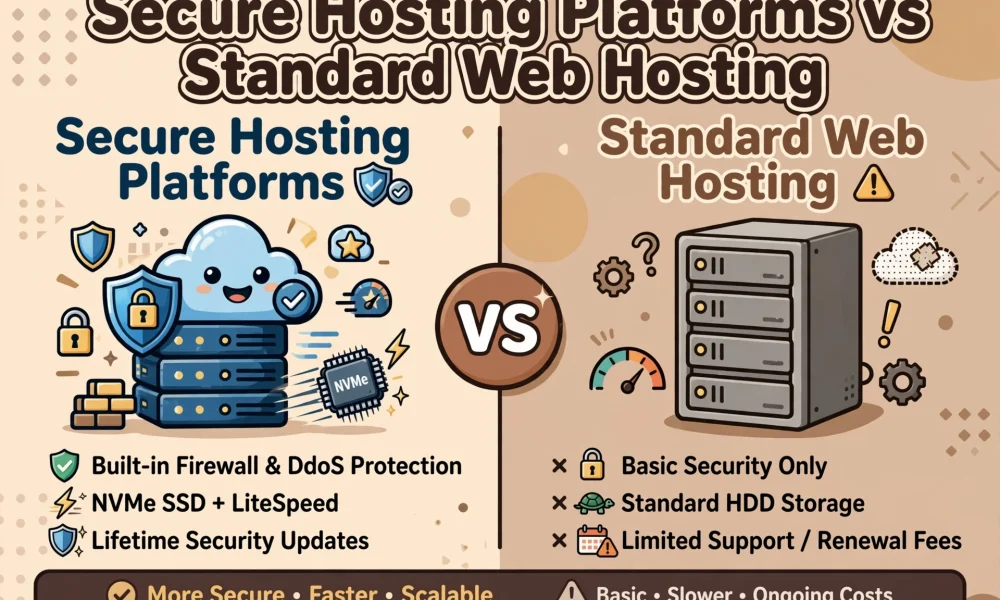

Quick Summary: DDoS-focused hosting filters attack traffic at the network edge before it hits your server, while standard hosting often only blocks junk after it arrives, leaving your site vulnerable to massive floods. Choose DDoS-focused hosting if your site earns money per visitor, like an online store or SaaS app, since downtime costs more than the upgrade. Standard hosting works for low-risk blogs and portfolios, but for growing businesses, built-in protection like Talos Hosting’s NVMe and LiteSpeed stack with no renewal fees pays off. Always ask providers for the mitigation capacity in Gbps and where filtering happens in the traffic path, because vague answers mean basic protection only.
Can a flood of fake traffic take your site down tonight? If yes, you need DDoS protection built into hosting, not bolted on. This comparison covers where DDoS protection filters attack traffic, how plans differ, and what to ask before you buy. For a low-risk site, standard hosting may still be enough.
DDoS-Focused Hosting vs Standard Hosting: At a Glance
| DDoS-focused web hosting | Standard web hosting | |
|---|---|---|
| DDoS mitigation approach | Traffic routed through distributed filtering nodes | Provider-specific baseline or plan-dependent protections |
| Protection scope | Provider describes L3-L4 and L7 mitigation | Must be confirmed for each plan and traffic path |
| Setup and management | Integrated hosting with cPanel and traffic analytics | Typically managed through the hosting provider’s tools |
| Best for | Sites where attack-related availability is a key concern | Lower-risk sites when included safeguards meet requirements |
| What to verify | Plan scope, limits, support response, and exclusions | Whether mitigation is included, always on, and plan-specific |
How DDoS-focused web hosting and Standard web hosting Compare
DDoS-focused web hosting
This is hosting built with attack filtering woven into the traffic path. Traffic passes through distributed filtering nodes that handle both network-layer and application-layer threats. It suits sites where staying online during an attack matters most, like stores and lead-gen sites. Providers such as DDoS-Guard describe mitigation across L3-L4 and L7 layers, often paired with cPanel and traffic analytics.
Key strengths
- Filtering designed into the network, not bolted on
- Protection at both network and application layers
- Always-on mitigation with traffic visibility
Standard web hosting
This is general-purpose hosting that may include some baseline filtering, though coverage varies by provider and plan. It works well for blogs and small sites with lower risk, as long as the included safeguards meet your needs. Plans from Hostinger and similar providers differ, so always check whether mitigation is included, always on, and specific to your plan.

Key strengths
- Lower cost and simpler setup
- Broad hosting features in one place
- Fine for lower-risk sites when safeguards fit
How DDoS Protection Changes the Traffic Path
Coverage at the Network and Application Layers
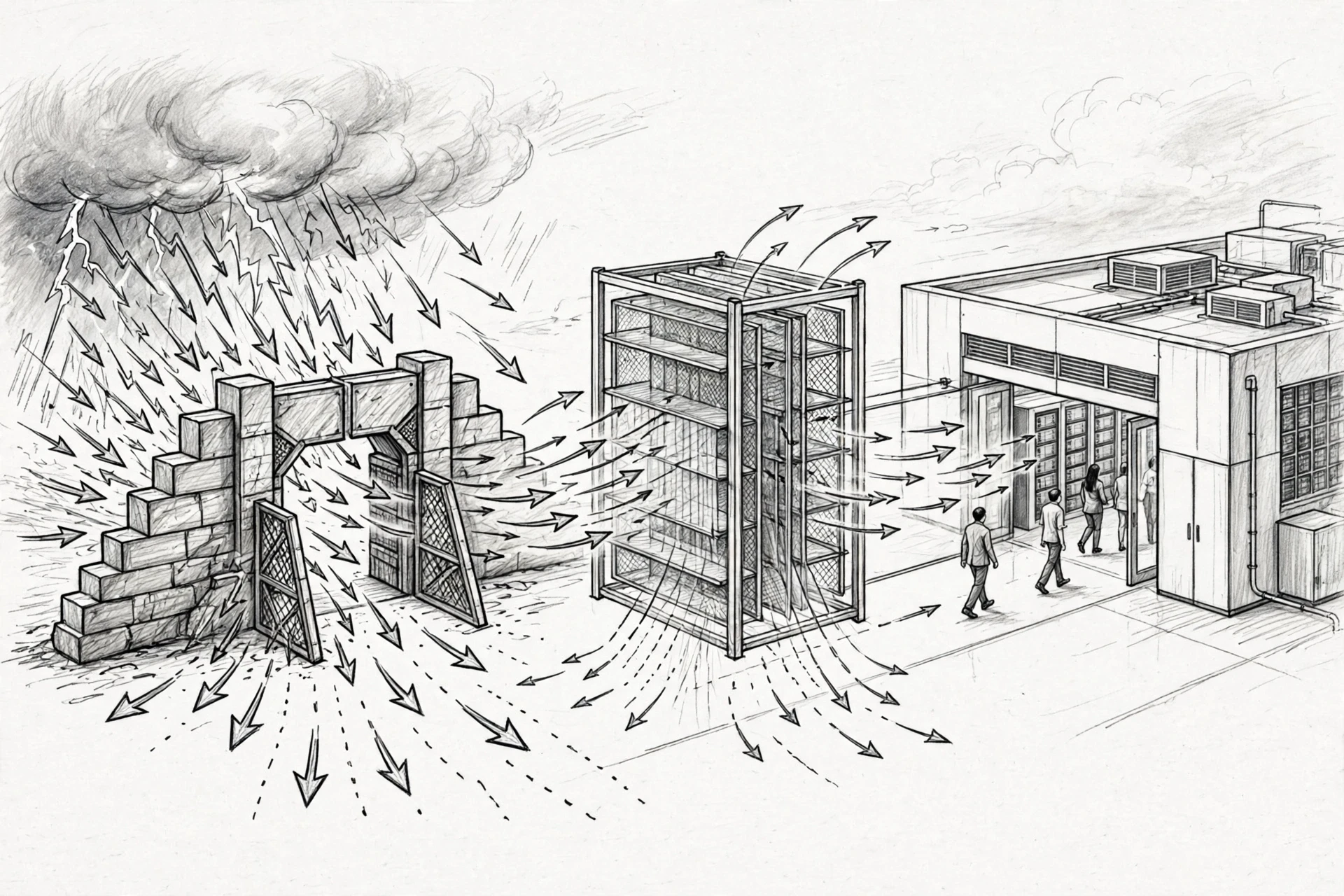
Standard hosting usually blocks attacks only after junk traffic reaches the server. Secure platforms filter it earlier, at the network edge. That difference matters: with Cloudflare’s DDoS reports showing attacks now measured in millions of requests per second, a lone server cannot absorb that load.
Built-in protection splits the work into two layers:
- Network layer (Layers 3/4): filters flood traffic before it touches your site.
- Application layer (Layer 7): screens requests for real visitors versus bots.
The result is a traffic path where attack traffic stops upstream, so your server keeps serving real customers. Talos Hosting builds this filtering into its US-based platform rather than leaving it as an add-on.
What Protection Means for Your Site in Practice
Real protection shows up at three points: before an attack, during one, and after. Look for DDoS filtering built into the traffic path, not a bolt-on CDN. Ask if the host absorbs attacks at the network edge, how fast mitigation kicks in, and whether protection costs extra.
Then check the boring stuff. Do backups run daily, and can you restore them yourself? Is there a web application firewall? Does SSL come included?
Ask for the mitigation capacity number in Gbps. A host that won’t share it is relying on marketing claims, not infrastructure.
Talos Hosting bundles these defenses into every plan, with no renewal fees, so protection lasts as long as your site does. That’s what “secure” should actually mean.
Questions to Ask Before Choosing a Provider
Verify Coverage, Limits, and Incident Support
Before you sign up, ask pointed questions. What attack size can the provider absorb, in Gbps? Is mitigation built into the network path, or bolted on later? Does protection cover all plans, or only premium tiers? Who responds during an attack, and how fast?
Get answers in writing. Vague “we handle DDoS” replies usually mean basic filtering only.

A serious provider answers every question with numbers and a clear process. Talos Hosting includes enterprise-grade defense on every plan, with no renewal fees, so protection never lapses.
Which Should You Choose: DDoS-Focused or Standard Hosting?
Pick DDoS-focused hosting if your site earns money per visitor: an online store, SaaS app, or agency client site. Downtime costs more than the plan upgrade.
Standard hosting works for hobby blogs and portfolio sites with low traffic and no payment flow.
Most growing businesses sit in the middle. That is where built-in protection pays off. Talos Hosting bakes mitigation into its NVMe and LiteSpeed stack, so you get speed and protection without a separate bill.
Ask your current host one question: “Where in the traffic path is DDoS traffic filtered?” A vague answer means you are on standard hosting, whatever the sales page says.
Ready for hosting built to withstand attacks? Choose lifetime, secure hosting from Talos Hosting with no renewal fees. Visit today.
Frequently Asked Questions
Q1: Compare leading secure hosting providers?
Compare providers on DDoS mitigation built into the traffic path, uptime guarantees, storage speed, and renewal fees. Talos Hosting offers lifetime pricing with no renewals, NVMe SSDs, LiteSpeed, and US-based infrastructure.
Q2: Does standard hosting really protect against DDoS attacks?
Only partly. Most standard plans offer basic filtering. Secure platforms absorb attacks at the network level, so your site stays online while fake traffic gets dropped.
Q3: Is a lifetime hosting plan a safe long-term choice?
Yes, if the provider runs its own stable infrastructure and has clear performance records. Check data center locations, hardware specs, and support response before committing.
Q4: Can I switch from standard hosting to a secure platform easily?
Usually yes. Most providers, including Talos Hosting, help migrate your files, databases, and email. Plan the move during low-traffic hours to avoid downtime.
Making the Right Hosting Choice
Standard hosting adds security later; secure hosting builds DDoS defense into the traffic path. Ask vendors the hard questions, compare verified coverage, and pick the secure hosting platform your site can lean on.

7 Business Hosting Providers for Small Companies in 2026
How to Pick Performance Hosting for WordPress Sites



No Comment! Be the first one.