
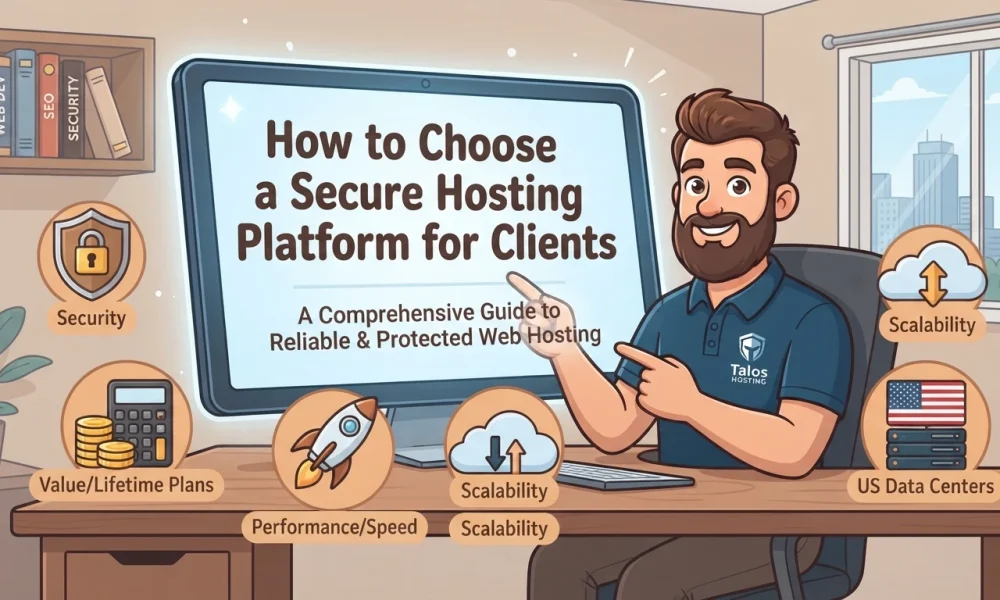

Quick Summary: Effective website security begins at the hosting layer with hardened infrastructure and proactive monitoring rather than simple software updates. You should prioritize providers that offer geographic data integrity, NVMe storage, and server-level defenses like LiteSpeed. Platforms such as Talos Hosting integrate these safeguards directly into their architecture to ensure client data remains protected and compliant.
Your clients’ websites are only as secure as the servers beneath them. A plugin update can’t patch weak server security, and neither can a strong password. Real protection starts with the hosting layer: hardened infrastructure, isolated accounts and fast response to new threats.
That’s the challenge this guide solves. We’ll walk through an architectural way to judge any host, the questions to ask before you sign a client, and the red flags that marketing checklists hide. We’ve evaluated hosting platforms for agencies and developers for years, so the advice here is practical, tested and vendor-aware. If you want a shortcut, platforms like Talos Hosting build these safeguards in from the start.
Foundational Requirements for Robust Server Security
Server security starts before you compare features or prices. It begins with knowing exactly where your clients’ data lives and which laws govern it. That single fact shapes encryption duties, breach notification timelines, and even who can be compelled to hand over records.
Data Sovereignty and Geographic Integrity
Data sovereignty means your data falls under the laws of the country where it is stored. A server in another region may sit outside the legal protections your client assumes they have. For US-based clients, hosting in US data centers keeps data under US jurisdiction, which simplifies compliance and reduces legal friction. Ask every provider two questions: where exactly do the servers sit, and who can access them? Vague answers are a red flag. Providers like Talos Hosting make this simple by running exclusively from US data centers, so geographic integrity is guaranteed rather than negotiated.
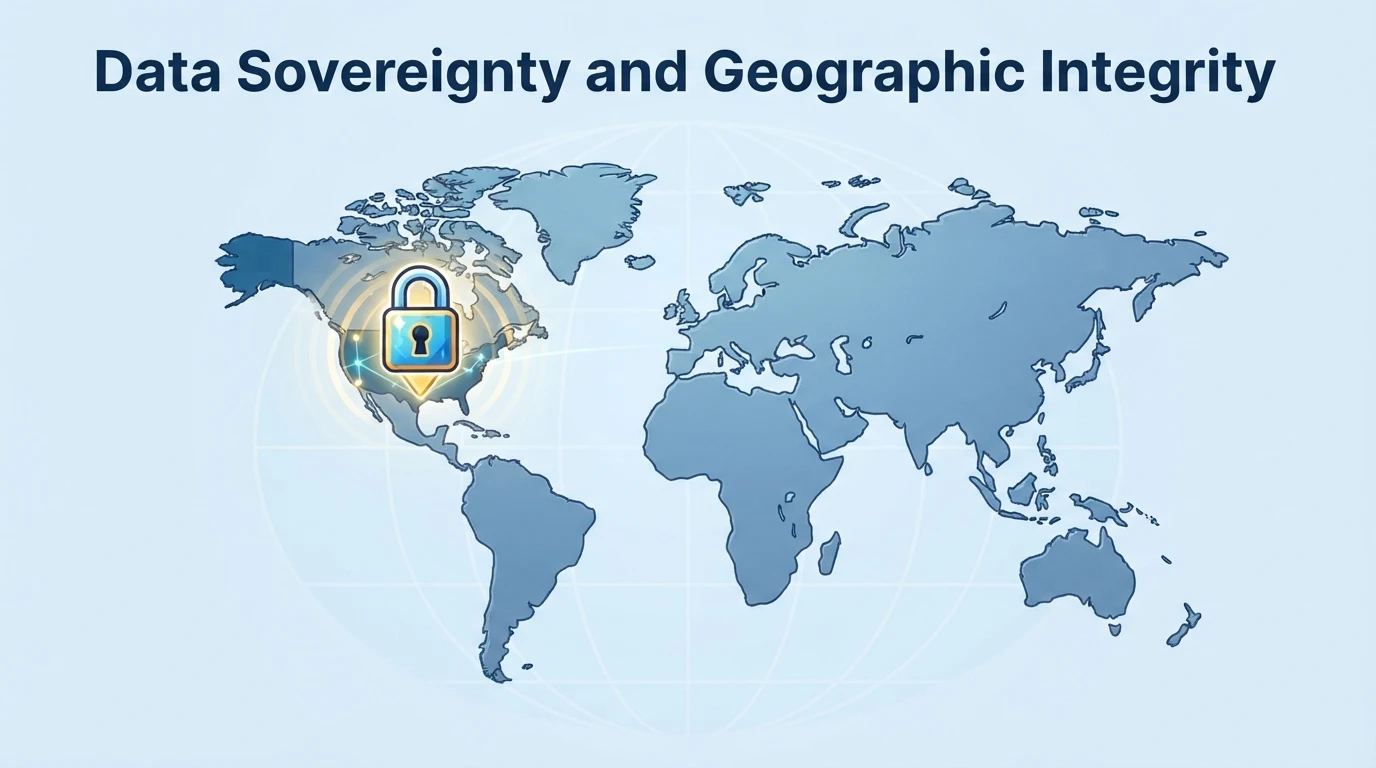
This matters for server security because response obligations differ by region. If a breach occurs, notification rules follow the data’s home jurisdiction. Choose a platform where that jurisdiction matches your clients’, not where the price is lowest.
Secure hosting platforms build this foundation in from day one.
Evaluating Infrastructure Technology for Threat Mitigation
Security starts with the hardware stack, not the marketing page. Ask every host two questions: how data is stored, and how the web server blocks attacks before they reach your code.
Storage Integrity with NVMe SSDs
Storage design shapes how well a server survives failure and abuse. NVMe SSDs move data over the PCIe bus, so they handle far more input and output operations than older SATA drives. That matters for security because raid rebuilds and integrity checks finish faster, which shortens the window where data sits exposed. NVMe drives also fail more predictably, so monitoring catches problems before corruption spreads. Fast storage also means log files and audit trails stay writable under load, so you keep evidence during an attack. How NVMe hosting speeds up databases and pages covers this in depth.
LiteSpeed Server Defense Mechanisms
LiteSpeed builds protection into the server layer, where shared hosts need it most. Its built-in anti-DDoS throttling caps connections per IP, so traffic floods drain away before they exhaust memory. ModSecurity rules block injection and cross-site scripting at the request level. LiteSpeed also isolates each account in its own process, so one compromised site cannot read another tenant’s files. Because it serves more traffic on fewer resources, patches and restarts take less time.
Managed Security Protocols and Oversight
Security works best when someone watches for trouble before it happens. Proactive monitoring spots threats as they build, so a breached site never becomes your problem.
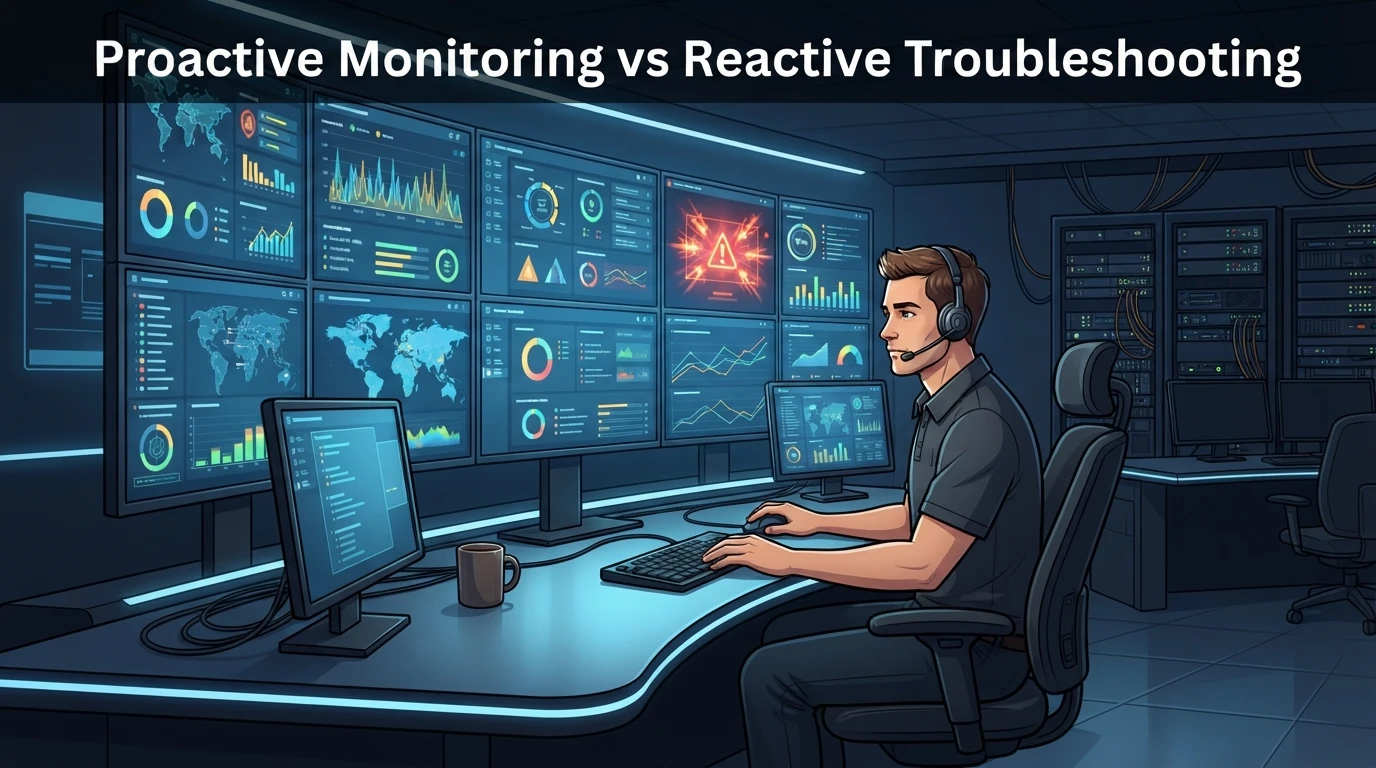
Proactive Monitoring vs Reactive Troubleshooting
Reactive hosting means waiting for something to break, then fixing it. Your site goes down, your client loses sales, and everyone scrambles. Proactive monitoring flips that. The host tracks uptime, malware scans, login attempts, and server load around the clock, then acts on small signals before they grow. A suspicious file gets quarantined. A traffic spike gets absorbed. You get a heads-up instead of a crisis.
When comparing hosts, ask three things: what they watch, how fast they respond, and who handles the fix. A good secure platform answers with named tools and clear response times, not vague promises. Talos Hosting, for example, builds this oversight into its plans, so you are not paying extra to have someone on watch.

Client sites deserve hosting you never have to worry about. Talos Hosting delivers secure, high-speed plans with no renewal fees, so you can hand over every project with confidence.
Frequently Asked Questions
Q1: Which secure hosting platform is best?
The best platform depends on your stack, budget and support needs. Look for daily backups, malware scanning, a web application firewall and fast support. Talos Hosting covers these with NVMe, LiteSpeed and no renewal fees.
Q2: How much should I pay for secure hosting?
Shared secure hosting starts around $3-10 per month. For client work, budget $10-30 monthly per site, or choose lifetime plans to avoid surprise renewals.
Q3: Is managed hosting worth it for agencies?
Usually yes. Managed plans handle patching, backups and security monitoring, so your team spends time on client work instead of server upkeep.
Q4: Do I need a US data center?
If your clients serve US audiences, yes. Local data centers cut latency and simplify compliance with US data expectations.
Conclusion
Choosing secure hosting means checking architecture, backups, patching, and support, not marketing checklists. Put every provider through the same tests, compare results honestly, and pick the platform that protects your clients’ sites first.

Talos Hosting Review: Is It Right for Small Business Websites?
Web Hosting Market Forecast Signals Strong Growth Through 2031




No Comment! Be the first one.