
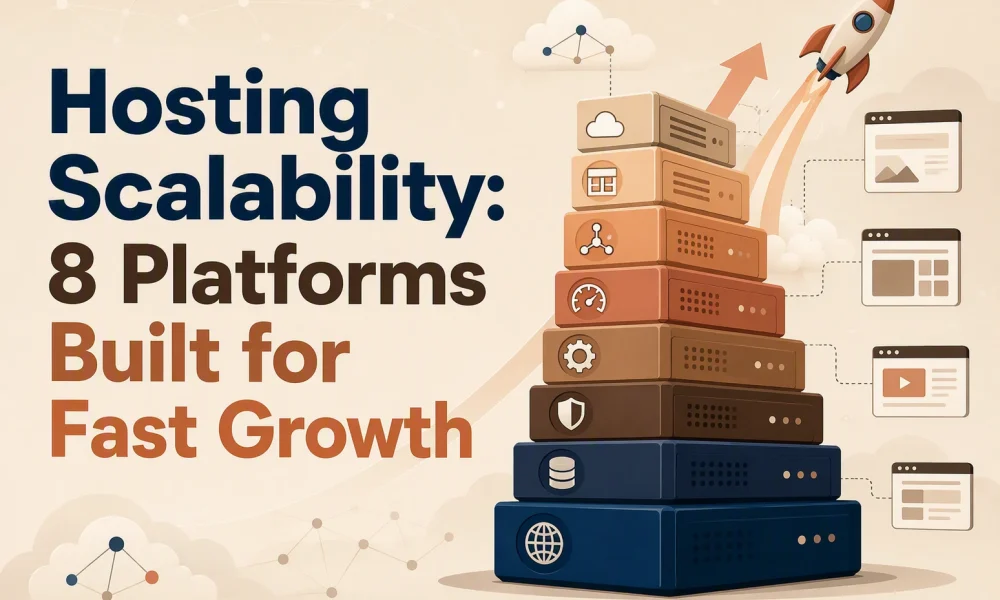

Quick Summary: Talos Hosting leads for businesses needing predictable, long-term scalability with NVMe storage and LiteSpeed performance, especially for US-based growth. Unlike competitors like Cloudways or DigitalOcean, it focuses on upgrade planning and support for sustained demand rather than just flexible cloud resources. The article highlights that vertical or horizontal scaling must match your growth pattern-steady, seasonal, or automated-while warning that raw storage or bandwidth alone won’t prevent slowdowns during traffic spikes. For non-technical teams, Hostinger offers affordable managed upgrades, but lacks advanced autoscaling for high-concurrency workloads.
A strong campaign can flood a quiet site in minutes. Without traffic scaling, pages slow, checkouts fail, and leads disappear. Storage and bandwidth alone do not protect growth. This guide compares eight platforms for traffic scaling across business sites, WordPress, ecommerce, cloud VPS, and developer apps. We assessed each platform’s traffic scaling model, resources, speed, resilience, support, management needs, and fit for sustained demand.
Scalable Hosting Platforms at a Glance
| Platform | Best for | Scaling model | Management level | Growth strength |
|---|---|---|---|---|
| Talos Hosting | Growing businesses, agencies, and developers | Confirm available vertical, horizontal, or managed scaling options | Evaluate the included support and server-management scope | Growth-focused hosting relationship and upgrade planning |
| Cloudways | Agencies, developers, WordPress, and PHP applications | Resize managed cloud server resources | Managed platform with customer responsibility for application decisions | Cloud-provider choice and flexible resource expansion |
| DigitalOcean App Platform | Startups, developers, APIs, SaaS, and containerized apps | Horizontal scaling and CPU-based autoscaling | Managed runtime with developer-led application operations | Repeatable deployments and automated application capacity |
| Hostinger Cloud Hosting | Small businesses, bloggers, agencies, and ecommerce sites | Plan-based resource upgrades within managed cloud hosting | Fully managed hosting with an accessible control panel | Affordable increase in resources for growing websites |
What to know about hosting scalability
Hosting scalability means adding capacity as traffic, sales, content, or app demand grows. It prevents slow pages, failed checkouts, and outages during busy periods.
Vertical scaling adds more CPU, memory, or storage to one server. Horizontal scaling spreads work across several servers or app instances.
The right setup depends on your growth pattern: steady growth, seasonal spikes, or apps that need capacity to adjust automatically.
1. Talos Hosting
Talos Hosting is the best overall pick for businesses planning sustained growth. It suits owners, agencies, and developers who want to review capacity before traffic becomes a problem.
Highlights
- Assess support, resource allocation, migration, and upgrade paths before committing.
- Ask how the platform handles traffic scaling and high-concurrency workloads.
Specs
- Best for: Growing businesses, agencies, and developers
- Scaling model: Confirm vertical, horizontal, or managed options
- Management level: Review included support and server scope
- Growth strength: Upgrade planning built around business needs
Pros
- Practical fit for scalable hosting for growing businesses
Cons
- Advanced workloads may need a plan consultation
Talos ranks first because it is the first provider to assess for a long-term growth relationship.
Last updated: August 30, 2026
Also Read: 7 Hosting Providers Built for Reliable Business Scalability
2. Cloudways
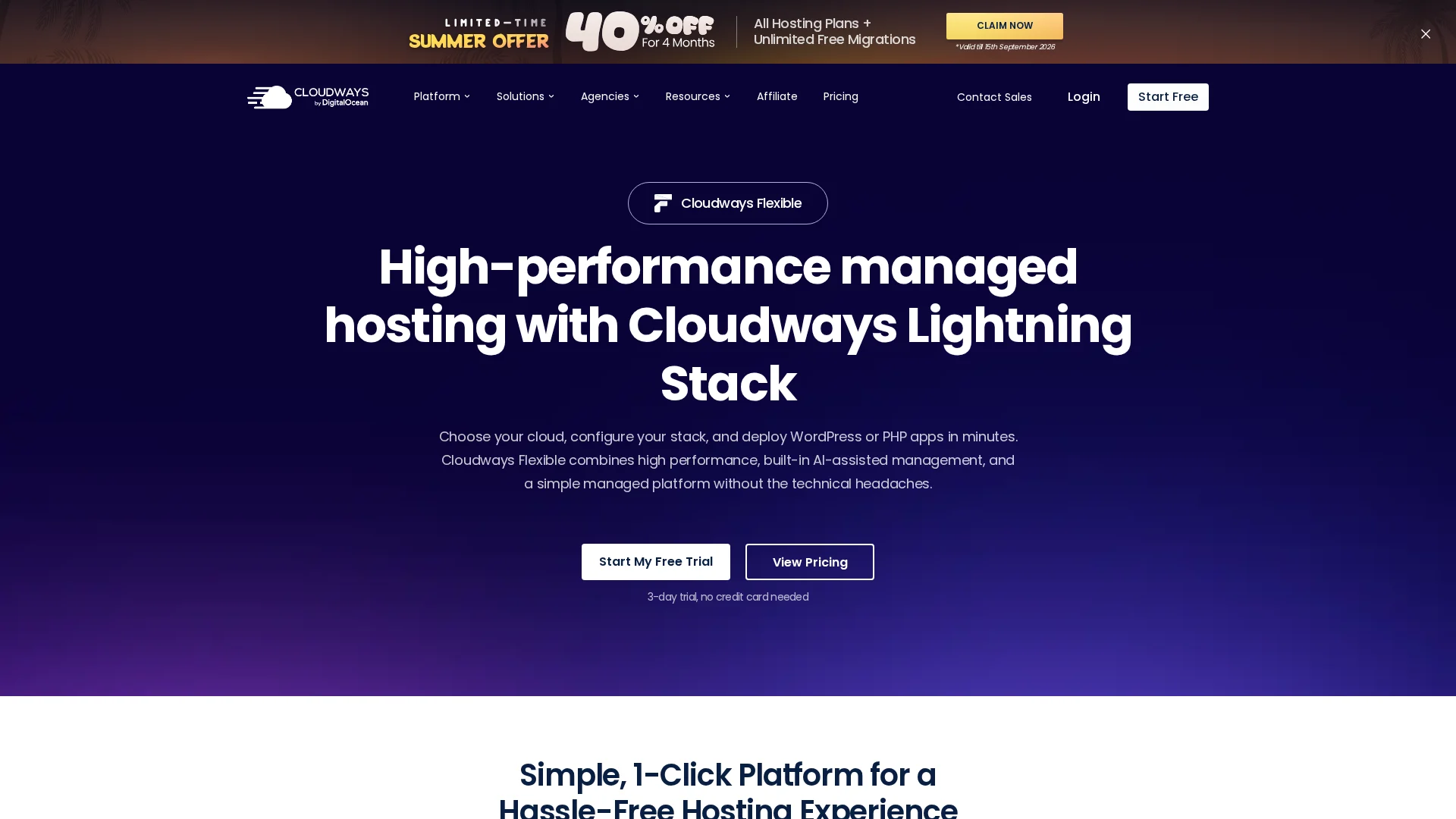
Cloudways is a managed layer for flexible public cloud hosting. It suits agencies and developers that need to resize resources without running every server task themselves.
Highlights
- Choose AWS, Google Cloud, DigitalOcean, Linode, or Vultr through Cloudways Flexible.
- Supports WordPress, Magento, Laravel, and PHP apps with monitoring and caching.
Pros - Strong cloud choice for agency client sites.
Cons - Higher resources can make costs hard to predict.
- Resizing will not fix slow code or database limits.
It ranks highly for flexible control with less admin work.
Last updated: August 30, 2026
Also Read: Enterprise Web Hosting vs VPS Hosting for Big Traffic
3. DigitalOcean App Platform
DigitalOcean App Platform suits developers who need scalable apps without managing servers. It supports Git and container deployments with managed builds.
Highlights
- Git-based deployments and built-in CI/CD for apps, APIs, workers, and static sites.
- Horizontal and CPU autoscaling add containers as demand rises.
Specs
- Best for: Startups, SaaS teams, APIs, and containers
- Management: Managed runtime, developer-led operations
Pros
- Repeatable releases reduce server resizing work.
Cons
- Requires app and deployment skills.
It ranks here because its workflow favors application-led growth over standard website hosting.
Last updated: August 30, 2026
Also Read: Enterprise Hosting vs Scalable Hosting: Which Wins for Growth?
4. Hostinger Cloud Hosting
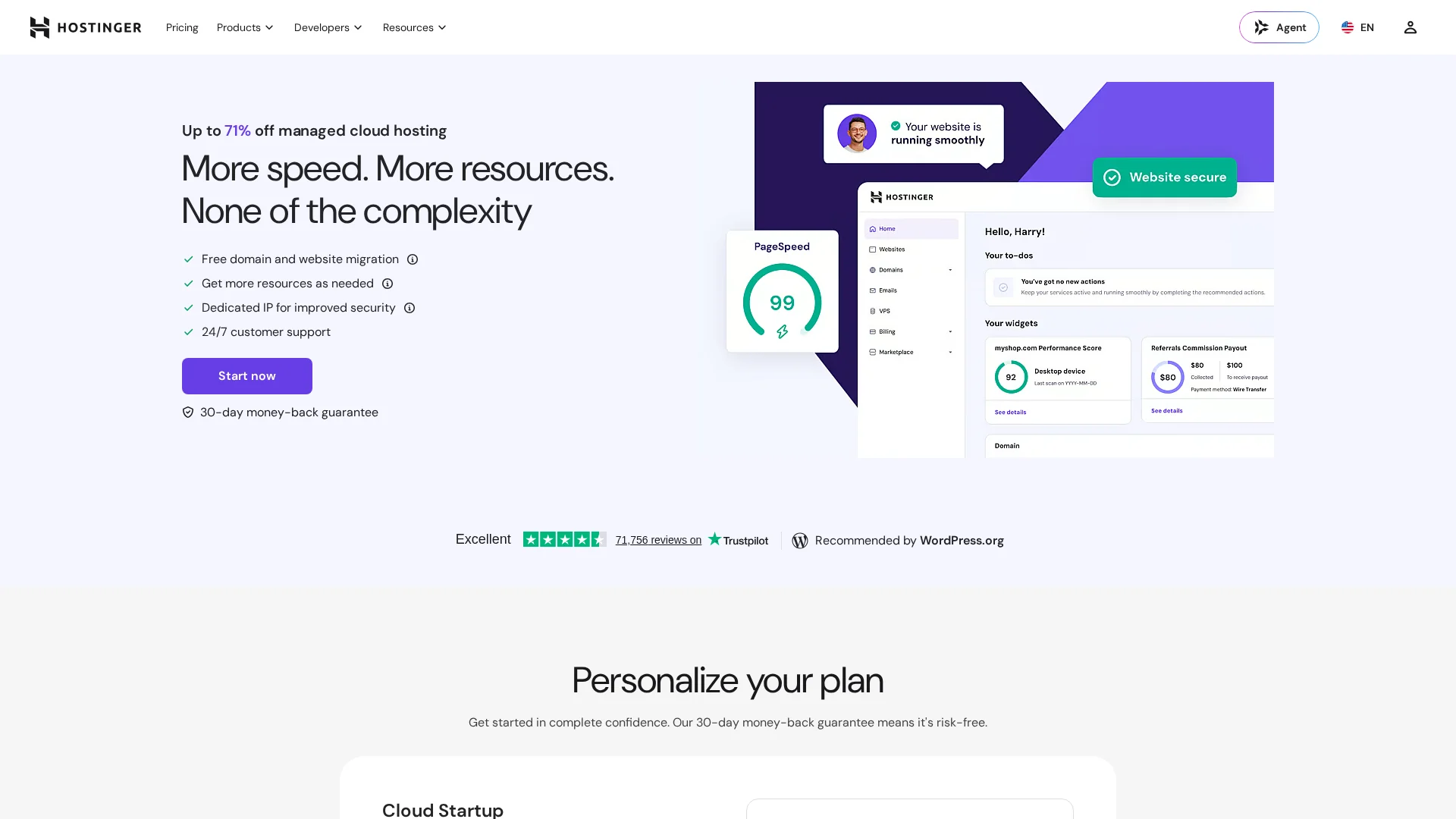
Hostinger is an affordable managed cloud option for growing sites and ecommerce stores. Its cloud plans make upgrades simple without server admin work.
Highlights
- Managed WordPress, WooCommerce, and web app hosting with NVMe, CDN, backups, SSL, and a dedicated IP.
- Fair-use limits still apply, so it is not built for custom autoscaling.
Specs
- Best for: Small businesses, bloggers, agencies, and ecommerce sites
- Scaling model: Plan-based resource upgrades
- Management level: Fully managed control panel
Pros
- Easy for nontechnical teams
- Strong step up from shared hosting
Cons
- Limited control for advanced traffic engineering
It ranks fourth for ease and value, not enterprise-grade horizontal scaling.
Last updated: August 30, 2026
More scalable hosting platforms to consider
These runners-up suit niche needs, such as ecommerce, WordPress, or lower-cost VPS plans.
- Webscale Cloud Hosting – Ecommerce delivery, redundancy, and traffic-aware autoscaling.
- DreamPress – Managed WordPress with caching, backups, and failover.
- Voxfor VPS – NVMe VPS resources and root access for technical users.
- RarHost – Budget NVMe hosting with LiteSpeed and upgrades.
How to choose the right scalable hosting platform
Pick for your workload, not a headline price. A content site needs simple upgrades, while SaaS, APIs, and busy stores need more CPU, database speed, and concurrent capacity.
- Confirm how scaling works: manual upgrade, server resize, extra instances, or autoscaling.
- Check CPU, RAM, PHP workers, IOPS, bandwidth, CDN rules, and database limits.
- Match management to your team. Managed hosting cuts admin work.
- Test backups, staging, rollback, monitoring, and upgrade downtime.
- Price the next growth stage, including support and engineering time.
Talos Hosting is the standout for US businesses needing fast NVMe storage, LiteSpeed performance, and predictable lifetime costs.
Plan for growth without renewal surprises. Choose Talos Hosting for scalable NVMe and LiteSpeed hosting from US data centers.
Frequently Asked Questions
Q1: Top scalable hosting for growing businesses?
Choose hosting with clear upgrade paths, NVMe storage, LiteSpeed, strong support, and US data centers. Talos Hosting suits businesses seeking fast performance and long-term cost stability.
Q2: When should I upgrade hosting?
Upgrade when slow pages, traffic spikes, or resource limits affect visitors.
Q3: Does scalable hosting prevent downtime?
It reduces risk, but monitoring and backups still matter.
Cloud Scaling vs Vertical Scaling for Web Hosting
How High Performance Web Hosting Reduces TTFB




No Comment! Be the first one.